|
|
Utter Paul Vanouse in-progress |
Vanouse projects |
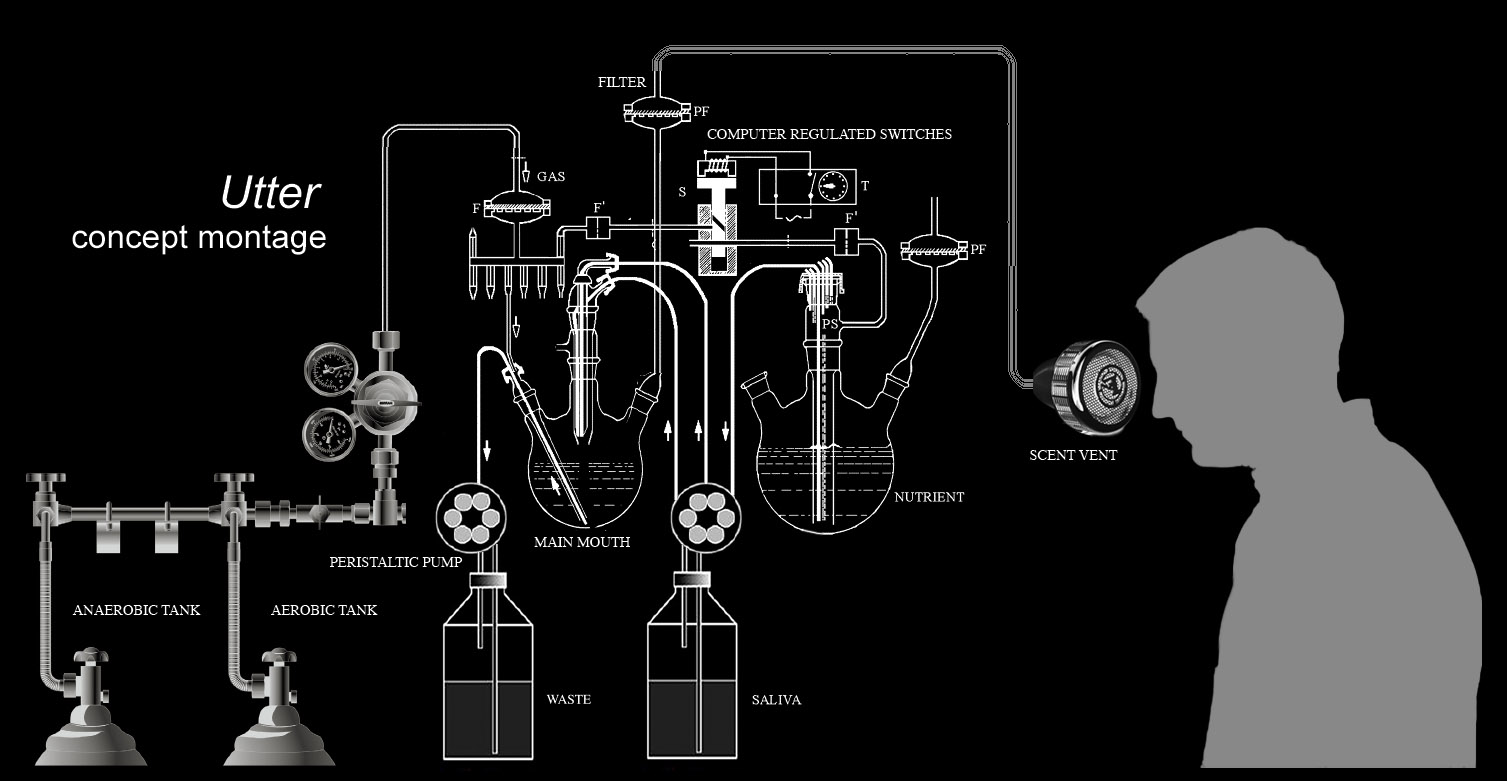
| Utter is a multi-sensory artwork based on
concept of ‘utterance,’ conceived amid the COVID
pandemic, in which the act of speaking is linked to
viral transmission. Our utterances are semio-material,
both linguistic and material, and connect us together in
complex ways not just through language, but also through
shared micro-materials and aromatic compounds..
|
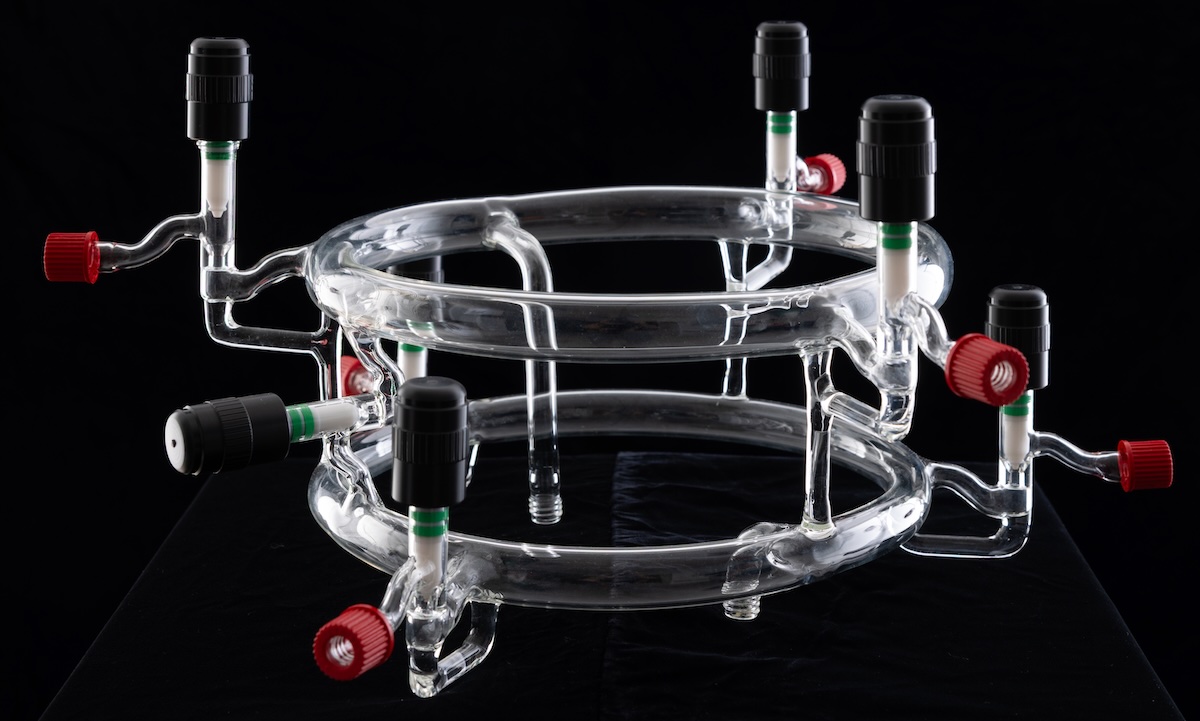 |
Utter enacts the biological
processes and social implications of human breath. The
goal is a multi-sensory installation, comprised of a
series of apparatuses that produce moist, odiferous
emissions, simulating human breath, without humans. The
apparatuses incubate a myriad of bacterial species native
to the human oral cavity in-vitro and release the scented
clouds through vents along the apparatuses' perimeter.
Air-flow through the system passes through both liquid
valve traps and 0.1-micron filters, which allow molecular
odors to disseminate, while ensuring viewers are not
exposed to microbes. Audiences will experience the work by
simply witnessing its fluid mechanical operations or
engage olfactorily by approaching vents along the
apparatuses’ perimeter which release the scented
emissions. Opposite: Central air-flow manifold, custom scientific glassware by Vanouse and Tracy Drier. 2023. Photo: Douglas Levere. |
| Mikhail Bakhtin expanded and
liberated the concept of ‘utterance,’ from its usage in
early twentieth century linguistics to include non-verbal
language and ‘otherness.’ Since Bakhtin, many scholars
have embraced the ‘post-semiotic’ turn, including Bruno
Latour, who uses the term 'semio-material' to flatten
human/non-human and actor/actant hierarchies in their
social models. Similarly, Karen Barad uses the term
'material-discursive' to undo the binary opposition
between representations and (their) objects, or more
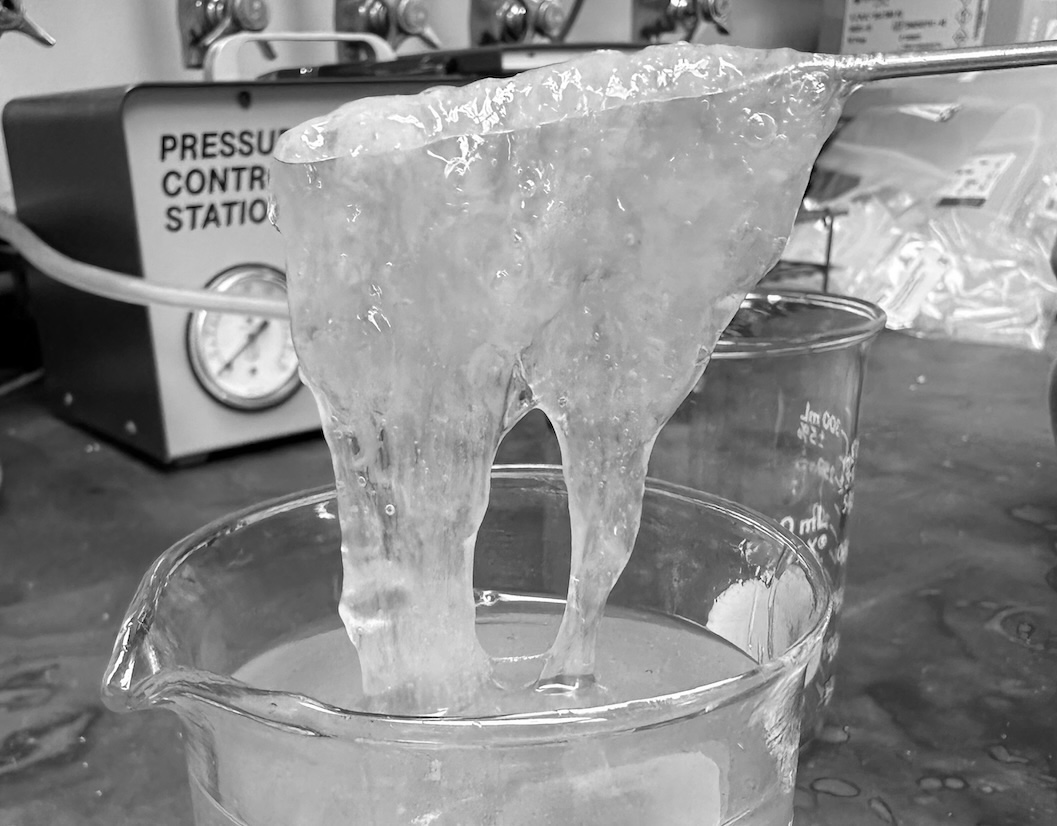
simply, between ‘words’ and ‘things.’. Opposite: Making artificial saliva in the Coalesce lab. In this image, one of our main ingredients, mucin, is being isolated from Okra stems. Mucin is a non-Newtonian fluid, thus its viscosity is not a fixed variable. Humans produce enough saliva in a lifetime to fill a small pool. It is a primary material used within the Utter apparatus. |
 |
 |
Such critiques of the primacy of
human language are mirrored by contemporary scientific
findings on the human microbiome, the microbes that live
on and inside our bodies. It is now recognized that our
bodies contain more microbial cells than human cells and
that these microbes regulate most of the metabolic and
cognitive processes that seemingly ‘make us human.’
Biologist Scott Gilbert concludes that, ‘Animals,
therefore, cannot be regarded as individuals by anatomical
criteria, but rather as holobionts, integrated organisms
composed of both host cells and persistent populations of
symbionts.’ The profound ontological implications of such
findings are elegantly summed up by Philosopher Lisa
Heldke who reflects that ‘… at the (literal) bodily centre
of us, we find not some solid, essential core, but the
rest of the world. We are literally tubes full of other
organisms.’ Reassessing our symbiotic relations with
non-human actors profoundly alters classical conceptions
of where ‘self' ends and ‘other’ begins. Opposite: U-trap flow filter custom scientific glassware by Vanouse and Tracy Drier. 2023. This device relies on positive air pressure to create a liquid/saliva barrier between inside and outside of the system. Photo: Douglas Levere. |
| The smells of the
human body are generally considered abject, unwanted and
never polite. Much of western culture is designed to
minimize body odors—deodorants, toothpastes, mouthwash,
breath mints, laundry detergents, soaps, room deodorizers,
as well the modern toilet. Historically, odors and myths
of their effects, have well served racism, xenophobia,
colonialism, and classism—reinforcing stereotypes,
enacting boundaries and dehumanizing perceived others. In
this context, the Utter project aims to place that which
is abject and hidden, back into the realm of ethical
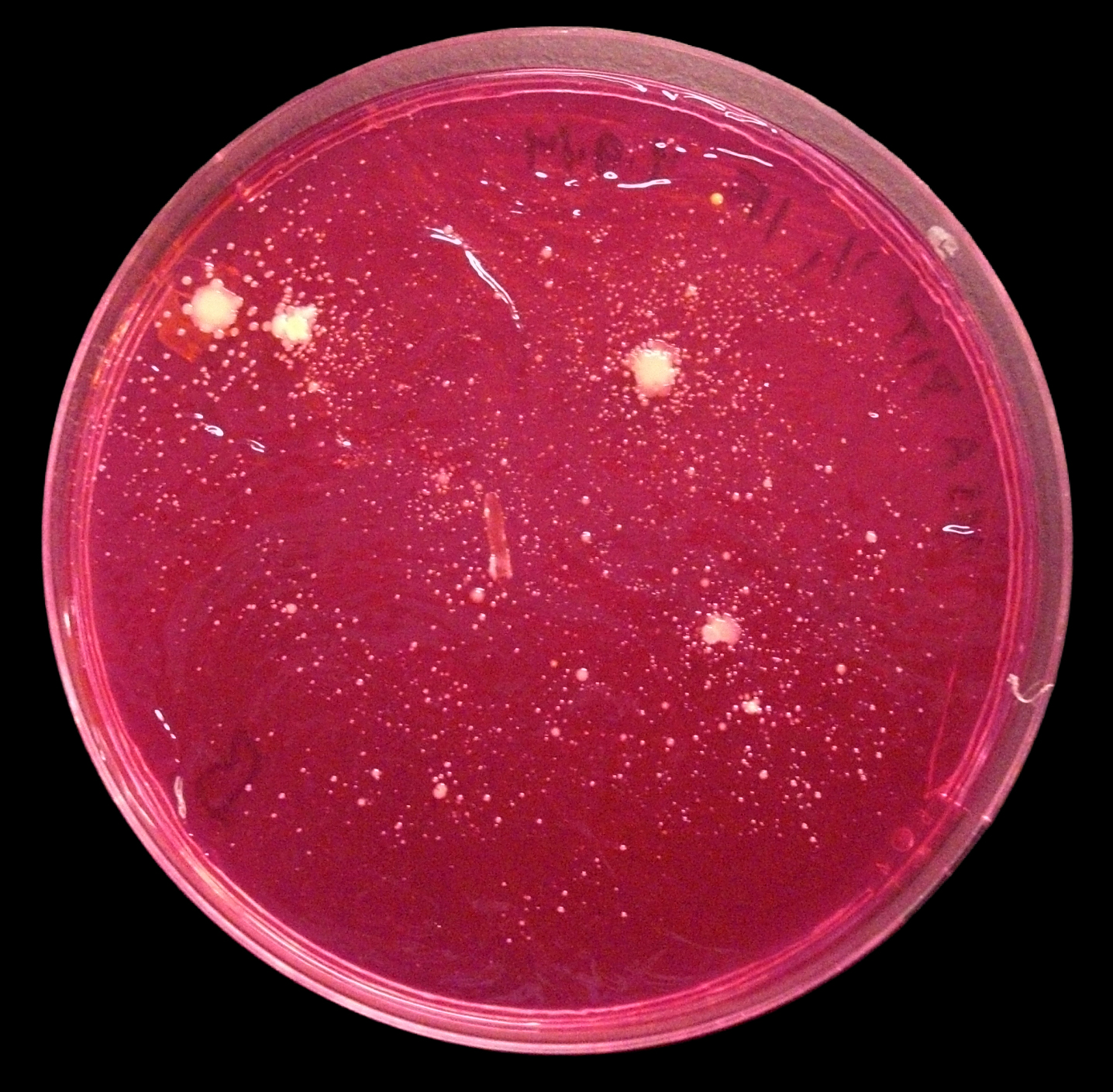
reflection and aesthetic contemplation. Opposite: A petri dish containing bacterial samples from Vanouse's microbiome. Biofilia, Aalto Univesity Helsinki, 2014. |
 |
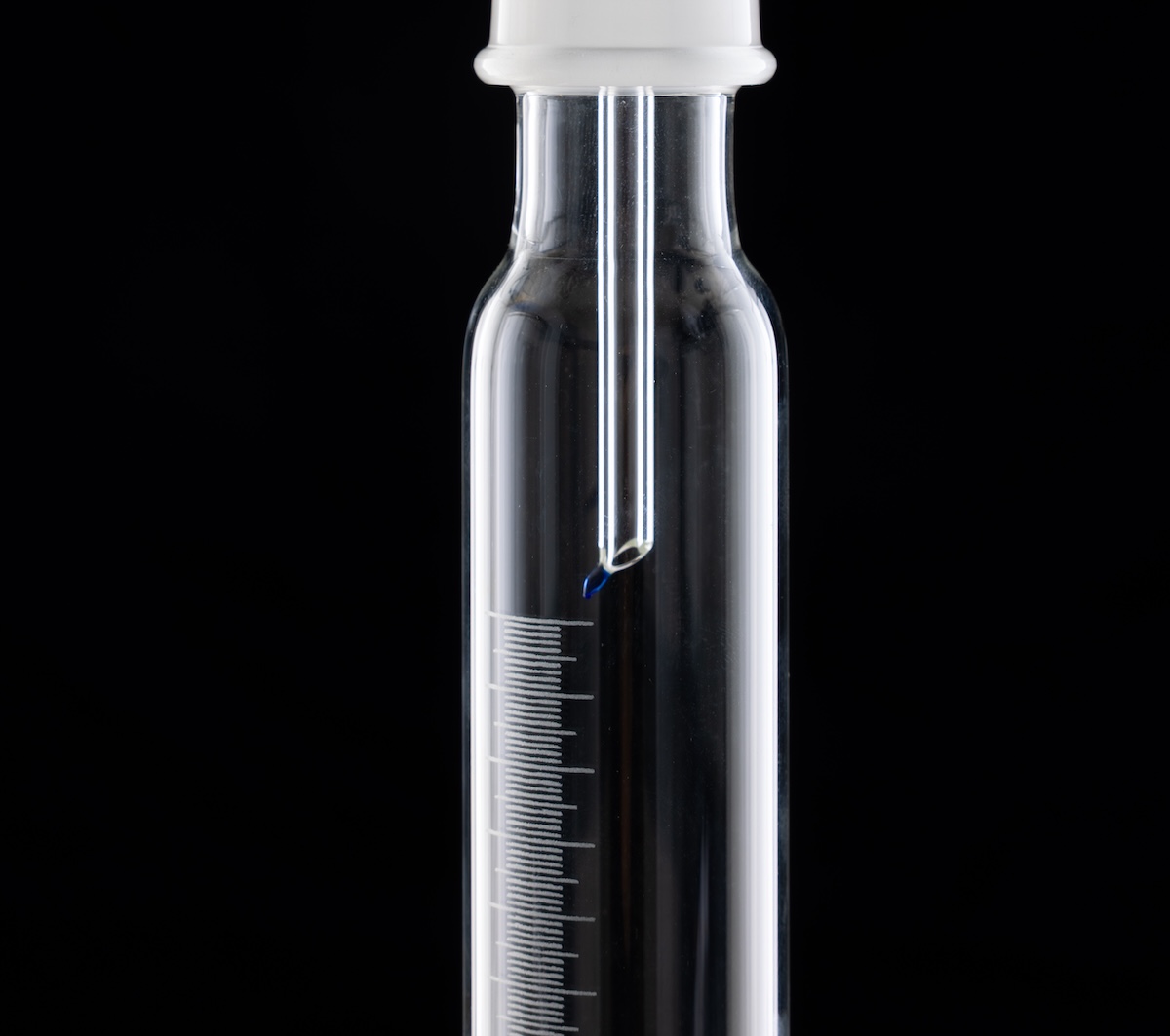 |
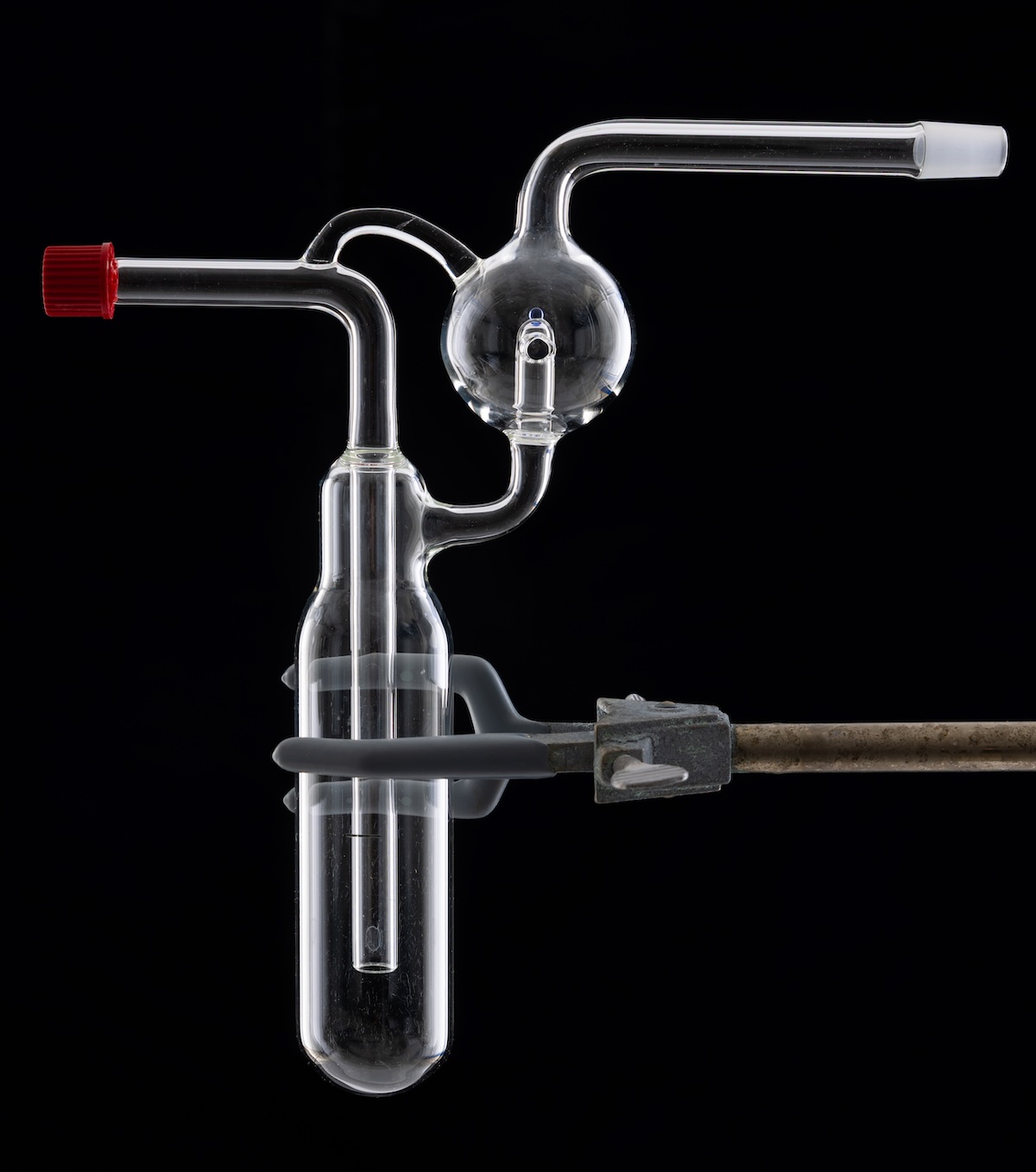
The scents of others can arouse such fear as they transgress the very borders of self via a cloud of otherness, literally the material from another’s body. However, audiences experiencing Utter may find these artificially produced, vaguely human scents simultaneously comforting, reminding us of social, physical, and sensual human contact. In the Hawaiian concept of Aloha, Alo means to share while ha is breath, which is also life. The exhaling of the syllable ‘ha’ for the other to breathe in is to share one’s life with another person. ‘Aloha’ can mean a greeting, a welcome, or love, though English translations are inadequate as there is no comparable concept in the West. Could it be possible to experience human scents as a welcoming transformation of the isolated self rather than as a hostile colonizing invasion? Opposite: Closeup of the Reversible-Drip Device. Vanouse uses the RDD, much like an hour glass, to measure the acting viscosity and drip length of the artificial saliva solutions and mucinates that fill the Utter apparatus. Created by Paul Vanouse and Tracy Drier. Photo: Douglas Levere. |
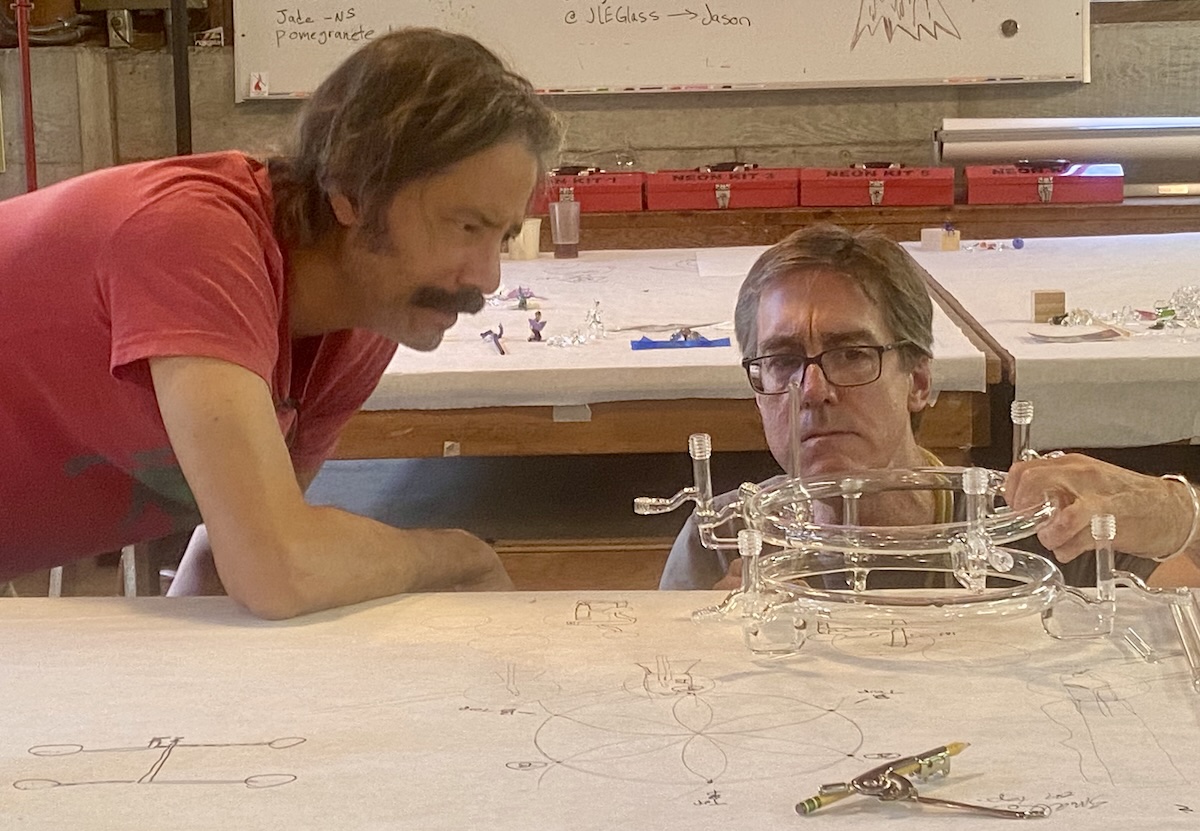
SCIENTIFIC ADVISORS AND COLLABORATORS Stefan Ruhl, University at Buffalo. Tracy Drier, University of Wisconsin, Madison. Solon Morse, University at Buffalo CONTRIBUTORS AND CONSULTANTS Manolo Santos Jessica Jane Julius Rinoi Imada SUPPORT Simons Foundation, New York, NY. Pilchuck School of Glass, Seattle, WA. Salem Community College, Glass Education Center, Salem, NJ. Coalesce Center for Biological Art, University at Buffalo. Humanities Institute, University at Buffalo. Cultivamos Cultura Artist in Residence program, São Luis, Portugal. Opposite: Paul Vanouse and Tracy Drier in residence at Pilchuck School of Glass. |
 |
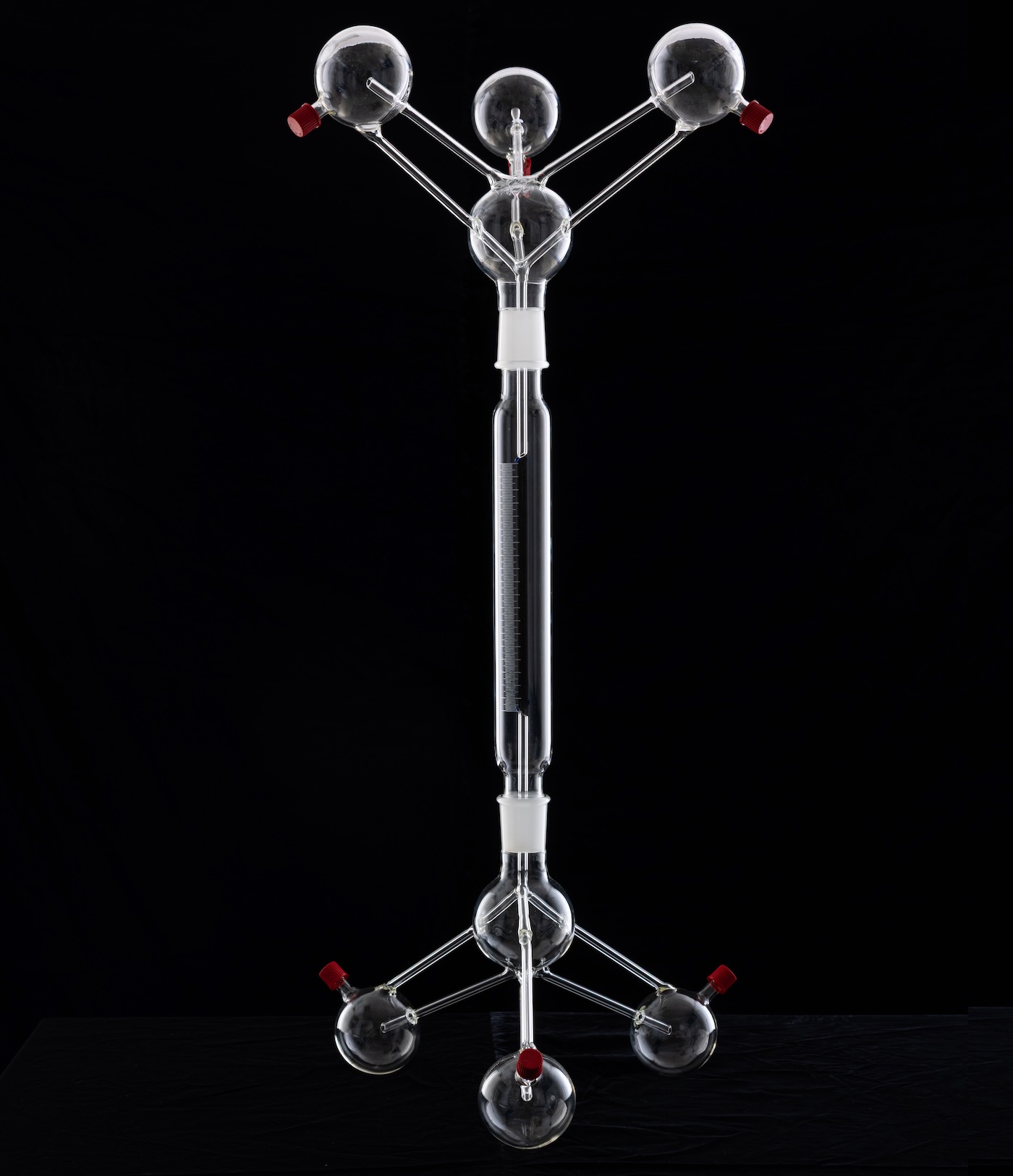
The Reversible Drip Device. Photo:
Douglas Levere.
Back to Vanouse projects